Event pricing should be based on total deployment cost (delivery, service frequency, pickup) plus a target margin of 35-45%. The biggest pricing mistake is quoting per-unit rates without accounting for service frequency, which can double your variable costs for high-volume events.
The Event Pricing Framework
The average portable toilet rental company leaves 15-20% margin on the table during event quotes because they price per unit without calculating the true service cost for the event's specific usage pattern.
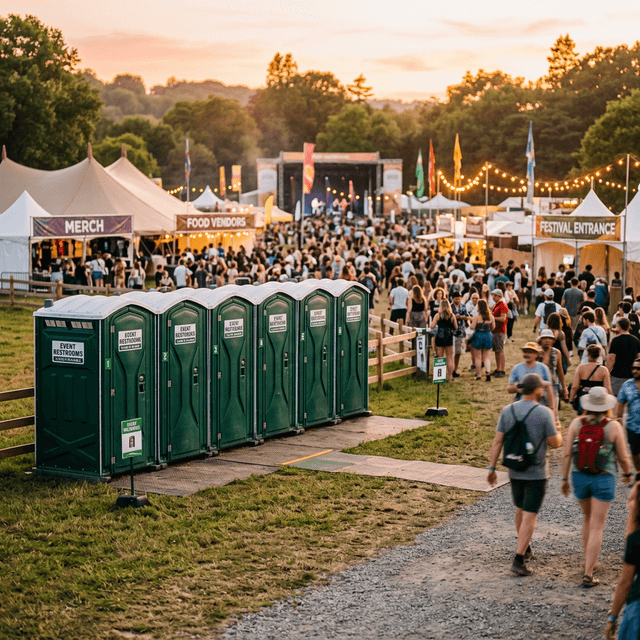
Event pricing is fundamentally different from construction site pricing. Construction is monthly, predictable, and low-maintenance. Events are short-term, high-intensity, and service-heavy. Applying your monthly construction rate to a festival will either overprice the deal (losing it) or underprice it (losing money).
This guide gives you the exact formula for profitable event pricing.
Cost Components for Event Quotes
Every event quote must account for five cost categories:
| Cost Component | How to Calculate |
|---|---|
| Delivery | Truck capacity x trips needed. A flatbed carries 10-16 standard units per load. |
| Rental (daily rate) | Base unit cost prorated by event duration. |
| Servicing | Number of service visits x per-unit service cost. High-volume events need 2-3x daily service. |
| Pickup | Same calculation as delivery. |
| Consumables | Chemical, toilet paper, hand sanitizer. Budget $5-$10 per unit per service. |
Example: 80-unit music festival, 2 days, with alcohol
- Delivery: 6 truck loads x $250 = $1,500
- Rental: 80 units x 2 days x $15/day = $2,400
- Servicing: 80 units x 4 service visits x $35 = $11,200
- Pickup: $1,500
- Consumables: 80 x 4 x $8 = $2,560
- Total Cost: $19,160
- Quote at 40% margin: $31,933
Event Type Pricing Tiers
Different events have different willingness-to-pay and service intensity:
| Event Type | Units | Duration | Service Frequency | Quote Range |
|---|---|---|---|---|
| Wedding | 2-4 | 1 day | Setup only | $300-$800 |
| Corporate outdoor event | 5-15 | 1 day | Once during | $800-$2,500 |
| Community fair | 15-30 | 1-2 days | Daily | $2,500-$6,000 |
| Music festival | 50-200+ | 2-3 days | Every 6-8 hours | $15,000-$60,000+ |
The Luxury Upsell: Every event quote should include a "premium option" with restroom trailers. Even if only 10% of clients upgrade, the margin on restroom trailers is 50-60% vs. 35-40% on standard units.
Structuring the Quote
Present quotes in a simple 3-tier format that makes the decision easy:
- Tier 1 (Essential): Minimum OSHA/health department units, standard service frequency, no upgrades.
- Tier 2 (Recommended): 10-15% more units than minimum, increased service frequency, handwash stations included.
- Tier 3 (Premium): Recommended count plus luxury trailer units for VIP areas, dedicated on-site attendant.
Always recommend Tier 2. Position Tier 1 as "meets minimum requirements" and Tier 3 as "the ultimate guest experience." Most clients choose Tier 2 because it feels responsible without being extravagant. Include a clear line item for ADA units in every tier.
Handling Price Negotiations
Event planners negotiate. Expect it. Prepare for it.
- -Never lower your per-unit rate. Instead, offer an extra unit or extra service visit at the same total price.
- -Offer a 5% early booking discount for contracts signed 60+ days before the event.
- -Bundle delivery and pickup into the total rather than itemizing them (reduces sticker shock).
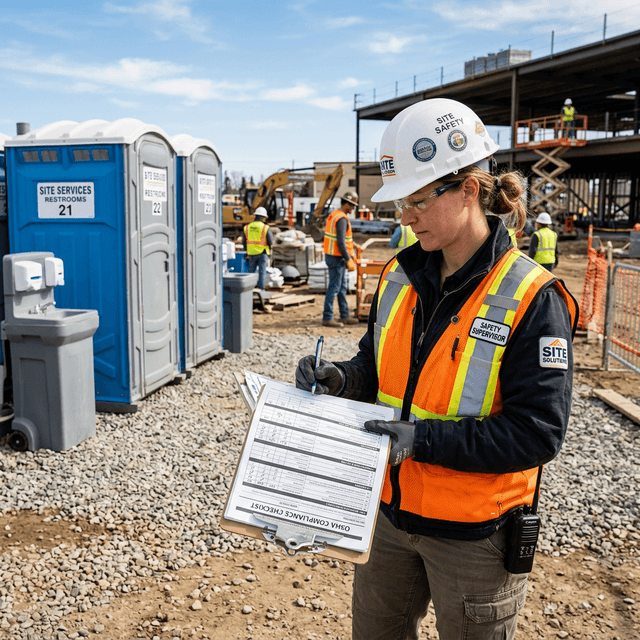
- -If the client pushes hard on price, reduce service frequency rather than unit count. Never go below the OSHA minimum.
The goal is protecting your margin while giving the client a reason to say yes. Adding a free unit costs you $15 in rental but demonstrates flexibility.
"Dropping your rate by 10% costs you $3,000 on a $30,000 contract and trains the client to negotiate harder next time. Hold firm on margin, bend on deliverables."
Post-Event Revenue Recovery
The event ends but your costs do not. Build a cleanup surcharge into every event quote that covers the final pump-out, deep cleaning, damage inspection, and return transport.
Most operators undercharge for this phase because they price it as "just another service visit." In reality, post-event cleanup takes 2 to 3 times longer than a standard service due to the condition of heavily used units. Price accordingly, and include this as a separate line item in your quote so the client sees it upfront rather than being surprised on the final invoice.
Event Pricing Model Variables
Festival and event pricing for portable toilets involves significantly more variables than standard construction site rentals. Understanding these variables ensures accurate quoting and healthy margins.
The primary variables include expected attendance count, event duration in hours, alcohol service availability (which increases usage by 30-40%), VIP section requirements, and whether the client requires luxury restroom trailers. Day-long music festivals with alcohol service at a ratio of one unit per 50 attendees can generate $15,000-$40,000 in revenue for a single weekend event.
The International Association of Venue Managers (IAVM) publishes event sanitation guidelines that inform the industry-standard ratios used in pricing calculators.
Event Quoting Best Practices
Accurate event quoting requires gathering specific information during the initial inquiry. The AI booking agent follows a structured questioning sequence:
- Attendance Estimate: Get the expected headcount and whether it is a ticketed event (firm count) or a public event (estimated range).
- Duration Assessment: Determine the exact start and end times, including setup and teardown windows that require units for staff.
- Alcohol Factor: If alcohol is served, automatically increase the unit count by 30% to accommodate higher usage frequency.
- ADA Requirement: Calculate the required number of ADA-compliant units based on total unit count and local accessibility codes.
- Luxury Upsell: For weddings, corporate events, and VIP sections, present luxury restroom trailer options at premium pricing.
For more on event unit calculations, read our guide on Porta Potty Calculator for Events.
Dynamic Pricing Strategy for Peak Event Seasons
Portable toilet pricing for festivals and events should not remain static throughout the year. Demand concentration during peak event season (May through September in most markets) creates pricing power that operators should capture through a structured seasonal rate schedule.
Peak-season pricing typically commands a fifteen to twenty-five percent premium over off-season base rates. This premium is justified by three factors: higher demand reduces unit availability, longer delivery distances to rural event venues increase transportation costs, and the logistical complexity of multi-day events requires additional servicing labor. Event planners booking during peak season expect to pay premium rates; failing to capture this margin is leaving money on the table.
The most sophisticated operators implement tiered event pricing based on the total contract value. Events requiring fewer than ten units receive standard per-unit pricing. Events requiring ten to thirty units receive a ten percent volume discount per unit but generate higher total revenue. Events requiring more than thirty units receive a fifteen percent volume discount but often include luxury trailer upsells that more than compensate for the per-unit discount.
Last-minute event bookings within seventy-two hours of the event date should carry a rush surcharge of twenty to thirty percent. This surcharge covers the operational disruption of rearranging delivery schedules and pulling units from other deployments. Communicate this surcharge transparently by publishing it on your website and including it in your standard rate card so customers understand it before requesting expedited service.
Advanced Cost Modeling for Multi-Day Festival Deployments
Quoting a multi-day music festival or a large-scale municipal event requires cost modeling that extends far beyond a simple multiplication of unit count by a daily rental rate. Operators who fail to account for the compound logistical complexities of large events frequently find that their seemingly lucrative contract has actually resulted in a net financial loss once all operational costs are tallied.
The primary hidden cost in large-scale event deployment is labor variance during setup and breakdown. Unlike a construction site where a driver backs up and drops a unit near the curb, festival grounds require precision placement across varied terrain. A deployment of fifty units might require navigating around vendor tents, avoiding buried utility lines, and positioning units on soft grass without causing turf damage. A delivery that mathematically should take two hours can easily stretch into six hours of highly paid labor time. Advanced cost modeling requires applying a "terrain complexity multiplier" to the baseline delivery labor estimate, factoring in the specific venue topography and the strict delivery windows imposed by the event organizer.
Mid-event servicing introduces another layer of complex cost modeling. For a three-day festival with ten thousand attendees, the units will require pumping and restocking multiple times per day. However, navigating a pump truck through a crowd of thousands of intoxicated attendees is both dangerously slow and highly disruptive to the event experience. Consequently, servicing must be scheduled during narrow overnight windows or early morning hours.
This requires modeling for premium labor rates, specifically overnight shift differentials and potential overtime pay for the technicians. Furthermore, the operator must calculate the turnaround time at the municipal wastewater disposal facility. If the festival generates thousands of gallons of waste per night, the pump truck may need to make multiple trips to the disposal site. If the municipal facility is not open twenty-four hours, or if the drive time is significant, the operator may need to deploy multiple trucks or utilize temporary holding tanks on-site, drastically increasing the capital and labor costs required to fulfill the contract.
Contract Structuring for Risk Mitigation
Large events carry inherent financial risks that standard construction rentals do not. Events can be canceled due to severe weather, organizers can go bankrupt before paying vendors, and attendees can cause catastrophic damage to the portable sanitation equipment. An operator's pricing strategy is incomplete if it is not supported by a robust contract structure designed to mitigate these specific risks.
The most critical element of an event contract is the payment schedule. Operators should never finance a large event out of their own cash flow. The standard best practice dictates a structured payment hierarchy: a non-refundable twenty-five percent deposit upon contract signing to reserve the inventory, an additional fifty percent due thirty days prior to the event date, and the final twenty-five percent due exactly one week before the first unit is delivered. If the final payment has not cleared the operator's bank account, the trucks do not leave the yard. This strict structure protects the operator from the all-too-common scenario where an event organizer uses vendor payments to cover last-minute shortfalls and ultimately defaults.
Damage waivers and equipment liability clauses must also be explicitly defined. A standard tipped-over unit requires extensive cleaning, but a unit destroyed by vandalism or fire represents a total loss of a capitalized asset. The contract must stipulate that the event organizer assumes full financial responsibility for all equipment from the moment of delivery until the moment of pickup. Sophisticated operators mandate that the event organizer provide a Certificate of Insurance (COI) naming the portable toilet company as an Additional Insured, covering replacement costs for the entire deployed inventory.
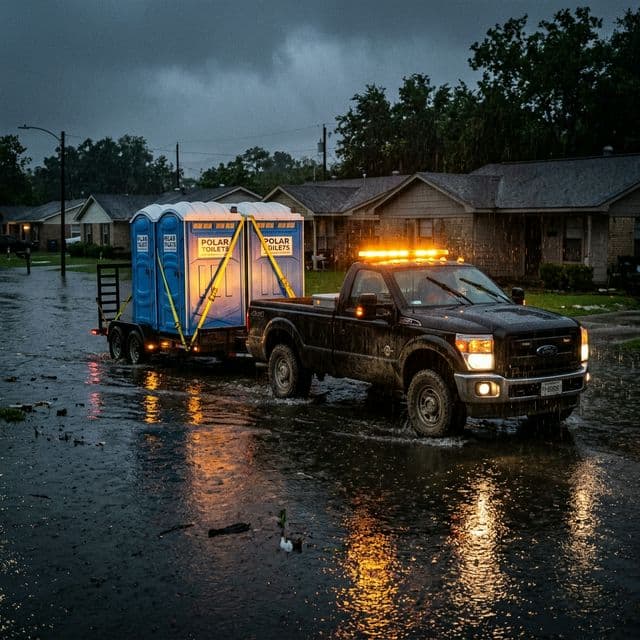
Finally, the contract must address force majeure and weather-related cancellations. If a hurricane forces the cancellation of a coastal music festival two days before setup, the operator has already incurred significant costs preparing the units, securing the labor, and turning away other potential rentals for that weekend. The contract should clearly state that weather cancellations within fourteen days of the event forfeit the entire deposit, and cancellations within forty-eight hours require payment in full, ensuring the operator's business stability is not compromised by unpredictable external factors.
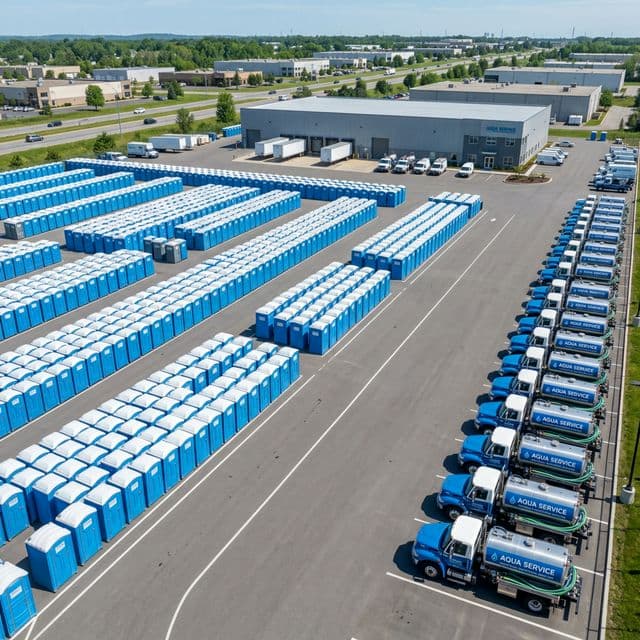
The opportunity cost of tying up inventory in poorly priced events is a silent killer of profitability. If an operator commits fifty units to a low-margin municipal street fair for the entire Fourth of July weekend, they are actively denying themselves the ability to rent those same fifty units to high-margin private parties and corporate retreats occurring simultaneously. Sophisticated pricing models analyze the historical demand curve for specific holiday weekends and establish a "minimum acceptable margin" for any contract signed during those dates. The dispatch platform can automatically enforce these margin rules, preventing the sales team from discounting units during peak periods and ensuring the operator maximizes the revenue yield of their finite physical assets during the short, critical event season.
Insurance requirements for event portable toilet deployments add cost and complexity that must be factored into pricing. Most event venues and festival organizers require general liability insurance of one to two million dollars, and some require additional insured endorsements naming the venue and event organizer as covered parties. The cost of maintaining adequate insurance coverage and providing certificates for each event should be amortized across all event bookings rather than charged as a line item.
Keep reading: